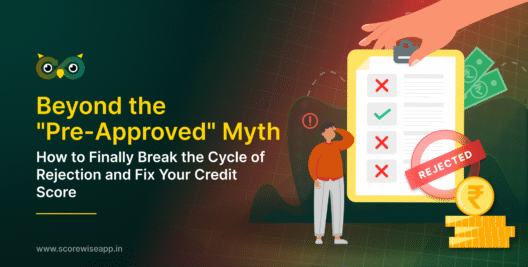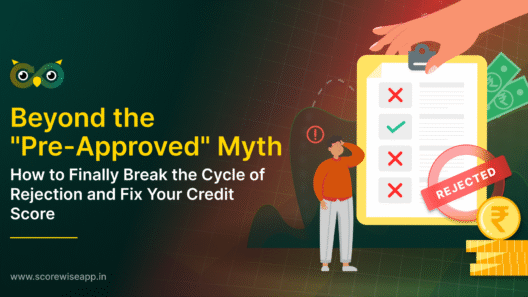

Imagine selecting your vehicle, completing the test drive, and submitting your loan documentation with confidence, only to receive a rejection notification.
For many potential buyers, a loan denial is a significant financial setback. However, in the current lending landscape, rejection is rarely a subjective decision; it is a mathematical one.
In the algorithmic environment of 2026, financial institutions utilize advanced risk assessment models to evaluate applications. A denial typically stems from specific data discrepancies within a borrower’s profile. Whether due to a minor credit oversight from previous years or a recent change in employment, these factors are often identifiable and rectifiable.
This guide analyzes the 5 critical reasons for car loan rejection and provides a structured roadmap to transition your application status from “Rejected” to “Approved.”
The Mathematics of Rejection: How Lenders Evaluate Risk
To address a rejection effectively, one must understand the lender’s decision-making process. Financial institutions assess a borrower’s Probability of Default (PD).
Lenders utilize a “Risk-Based Pricing” model wherein the CIBIL score serves as an eligibility filter, and the Income Ratio determines the permissible loan quantum.
When a car loan application is submitted, the lender’s algorithm evaluates three core pillars: Intent (Credit History), Ability (Income vs. Debts), and Stability (Employment Tenure). A deficiency in any of these areas classifies the application as “High Risk.”
The “Risk Bands” Analysis
Many applicants operate under the assumption that a score of 700 is sufficient. However, with tightening lending norms in 2026, the benchmarks have shifted. Data indicates that a score of 750+ is required to secure prime interest rates, which currently commence at approximately 8.70% p.a.
| CIBIL Score Range | Lender Perception | Likely Outcome | Interest Rate Impact (Approx.) |
| 750 – 900 | Super Prime | Instant Approval | Lowest Rates (~8.70%+) |
| 700 – 749 | Prime | Approval Likely | Standard Rate + 0.5% |
| 600 – 699 | Near Prime | High Risk | High Interest / High Down Payment |
| 300 – 599 | Sub-Prime | Rejection Likely | N/A (Rejection) |
Note: While 750+ is the industry standard, certain Non-Banking Financial Companies (NBFCs) may consider scores between 600-700, albeit at significantly higher interest rates to mitigate risk.
Reason 1: Unhealthy Credit Score
The CIBIL score is the most critical determinant in car loan approval; a score below 700 is the primary cause of rejection in India.
A common misconception among first-time borrowers is that a lack of credit history equates to a “clean” record. However, lenders view No Credit History (NH/NA) as a risk factor comparable to a poor credit history.1
Lenders utilize the CIBIL score to forecast future repayment behavior based on historical data. Statistical analysis suggests that applicants with scores below 700 possess a higher probability of default. Recent market data indicates that approximately 54% of loan rejections are directly attributed to insufficient credit scores.
Factors Contributing to a Low Score:
- Payment Delinquency: A single credit card payment delayed by over 30 days can reduce a score by 50-100 points.
- High Credit Utilization: Consistently utilizing more than 30% of an assigned credit limit signals credit dependency, which is viewed negatively by risk algorithms.
- Reporting Errors: In some instances, rejection results from clerical errors, such as closed loans erroneously appearing as “Active” or “Settled” on the credit report.
Expert Insight: A Credit Score signifies more than just payment history. For “New to Credit” applicants, the absence of a track record prevents the bank from assessing risk, often leading to a conservative decision on unsecured or high-value loans.
Reason 2: The “Debt-to-Income” Ratio Violation
Lenders may reject an application if the Fixed Obligations to Income Ratio (FOIR) exceeds 50%, regardless of the applicant’s credit score.
This metric is often the overlooked cause of rejection. An applicant may have a substantial income; however, if a significant portion is already allocated to existing debts (such as Home Loans or Personal Loans), the disposable income may be deemed insufficient.
Lenders calculate the Debt-to-Income (DTI) Ratio to assess leverage. In India, the standard threshold is 50%. If existing EMIs consume more than half of the monthly income, banks presume the borrower lacks the financial buffer required to service a new car loan,.
The Calculation of Rejection:
- Net Monthly Income: ₹80,000
- Existing EMIs: ₹25,000 (Car) + ₹15,000 (Education) = ₹40,000
- DTI Ratio: (40,000 / 80,000) * 100 = 50%
In this scenario, the addition of a new car loan EMI would elevate the DTI beyond the 50% threshold, triggering an automatic rejection.
Reason 3: Employment and Income Instability
Frequent changes in employment or a lack of business vintage indicate instability, categorizing the applicant as high-risk for long-term lending.
Car loans typically involve tenures ranging from 5 to 7 years. Financial institutions require assurance of income continuity for this duration.
- Salaried Employees: Frequent job changes (e.g., three organizations in one year) or being in a probationary period are viewed as instability markers. Most banks require a minimum of 1 to 2 years of continuous employment, with at least 6 months in the current organization.
- Self-Employed Individuals: Lenders assess “Business Vintage.” If a business has been operational for less than 2-3 years, or if Income Tax Returns (ITR) demonstrate fluctuating profitability, approval becomes difficult.
Professional Recommendation: It is advisable to defer any planned job changes until after the loan has been sanctioned and disbursed. Applications submitted during a probation period face a significantly higher rejection rate.
Reason 4: Documentation Discrepancies
Administrative errors, such as signature mismatches or address variances between KYC documents and the application, can lead to immediate rejection.
In the current digital lending ecosystem, verification processes are largely automated. Discrepancies, such as a name mismatch between a PAN card and the application form, can cause the system to flag the file for potential fraud or inconsistency.
Common Documentation Errors:
- Address Proof: The current residence address differs from the permanent address listed on official documents like Aadhaar or Passport without adequate explanation.
- Signature Mismatch: The signature on the application form does not align with the bank’s records.
- Digital Quality: In end-to-end digital applications, uploading low-resolution or illegible documents often results in verification failure.
While these issues are administrative in nature, strict compliance protocols make them a valid ground for rejection. Fortunately, these are among the easiest issues to rectify.
Reason 5: The Co-Applicant/Guarantor Liability
Serving as a guarantor for a defaulting borrower or including a co-applicant with a poor credit score can adversely affect your application.
If an individual stands as a guarantor for a loan that subsequently defaults, this negative history is reflected in the guarantor’s CIBIL report as well. Consequently, the guarantor becomes equally liable in the eyes of the lender.
Similarly, adding a spouse or parent as a co-applicant to enhance income eligibility can be counterproductive if the co-applicant possesses a poor credit score (e.g., <650). Lenders evaluate the joint application based on the risk profile of the weakest link, not just the primary applicant.
The Recovery Strategy: Converting Rejection to Approval
A loan rejection serves as a signal to recalibrate your financial profile. The following steps outline a recovery plan for 2026.
1. The Strategic Pause (The 90-Day Rule)
Avoid the urge to reapply immediately with a different bank. Each formal loan application triggers a “Hard Inquiry” on the credit report. Multiple inquiries within a short timeframe indicate credit desperation, further lowering the score.
- Action: Pause applications for 3 to 6 months. Utilize this period to reduce outstanding debts and lower credit utilization.
2. Enhance the Down Payment
If the DTI ratio is high or the credit score is borderline (650-700), offering a higher down payment (Margin Money) can mitigate lender risk.
- Rationale: Increasing the down payment from the standard 10-20% to 30-40% reduces the “Loan-to-Value” (LTV) ratio. This lowers the lender’s exposure and reduces the monthly EMI obligation.
3. Leverage a Strong Co-Applicant
If the primary applicant’s score is insufficient, applying jointly with a spouse or parent who possesses a score of 750+ is a viable strategy.
- Strategy: Position the individual with the stronger credit profile as the “Primary Applicant” where possible, or ensure their inclusion significantly boosts the overall creditworthiness of the application.
4. Select the Appropriate Lender
Major public and private sector banks (e.g., SBI, HDFC, ICICI) generally adhere to strict policies requiring scores of 700-750+. If rejected by these institutions, consider Non-Banking Financial Companies (NBFCs) such as Tata Capital, Bajaj Finance, or Shriram Finance.
- Consideration: NBFCs often have more flexible eligibility criteria but may levy interest rates that are 2-4% higher than traditional banks.
Frequently Asked Questions
Q1: Is it possible to secure a car loan with a CIBIL score of 600?
Answer: Securing a loan from major commercial banks with a score of 600 is challenging, as they typically mandate a score of 700-750+. However, NBFCs and specialized auto lenders may approve such applications provided the borrower demonstrates stable income, though likely at a higher interest rate (10-14%+),.
Q2: What is the recommended waiting period to reapply for a car loan after a rejection?
Answer: It is recommended to wait 3 to 6 months before reapplying. This interval allows time to address the cause of rejection (e.g., improving credit score or stabilizing employment) and prevents the accumulation of “Hard Inquiries” which can further degrade the credit score.
Q3: Does checking my own credit score impact my eligibility?
Answer: No. When an individual checks their own credit score via platforms like Scorewise or CIBIL, it is classified as a “Soft Inquiry” and has no impact on the score. A “Hard Inquiry,” which impacts the score, occurs only when a lender accesses the report for a loan application.
Q4: My loan was rejected due to a “High DTI.” How can this be resolved?
Answer: To resolve a high DTI, one must either increase the total application income (by adding an earning co-applicant) or reduce existing debt obligations. Closing smaller loans or clearing credit card dues is the most effective method to free up monthly repayment capacity.
Q5: Can I obtain a car loan if my credit report shows a “Settled” status?
Answer: A “Settled” status indicates that a previous loan was not paid in full, which is viewed negatively by major lenders. Applicants with this status may face rejection from top-tier banks and may need to approach NBFCs or consider secured lending options like Gold Loans or Loans Against Deposits.
Final Verdict: Strategic Financial Planning
A car loan rejection should be viewed as a temporary obstacle rather than a final verdict. Lending algorithms assess data, and data points can be improved.
By building a robust credit score, optimizing debt-to-income ratios, or strategically including a co-applicant, borrowers can align their profiles with lender requirements.
Take control of your financial profile. Verify your comprehensive credit report on Scorewise today to identify potential red flags and initiate the journey from “Rejected” to “Approved.”